
The Amish Work Ethic: How to Find Joy in Hard Work and Simplicity
The Amish work ethic is often admired for its focus, simplicity, and strong sense of purpose. In a world where many of us feel constantly busy yet never fully caught up, there is something refreshing about a slower, more intentional way of working. The good news is you do not need to live on a farm or give up modern conveniences to learn from it.
In this guide, I’ll share some practical lessons from the Amish way of life and how those lessons can help you create calmer routines, more meaningful work, and a simpler life at home.
If you are looking for more ways to slow down and create a calmer home and lifestyle, be sure to visit my Guide to Simple Living for practical tips and inspiration.

A few years ago, we hired a group of Amish men to build an addition on our barn. And let me just say right now…those men worked HARD. No standing around staring at phones. No wandering off every ten minutes “looking for a tool” while somehow ending up in a 20-minute conversation near the truck.
They showed up ready to work, and when they worked, they were completely focused on the task in front of them.
But what stood out to me even more was what happened during their breaks.
They rested just as fully as they worked.
They sat together laughing, joking, drinking coffee, and genuinely enjoying their downtime before getting back to work again. There was no complaining about the work ahead, no grumbling about how much they still had left to do.
By the end of it all, the barn was finished incredibly fast and done so well that we ended up hiring them again for more projects later on.
That experience stuck with me because it made me realize something important: hard work itself is not always the thing wearing us out.
Sometimes it is the distractions, but maybe even more so, it’s our tendency to multitask ourselves right into a corner…only to realize we never even finished the original project.
It was a good reminder that hard work does not always have to feel miserable. Sometimes the real problem is the way we rush through life while trying to do too much all at the same time.
The Amish Cook: Recollections and Recipes from an Old Order Amish Family Wanda E. Brunstetter’s Amish Friends Life Hacks: Hundreds of Tips for Cooking, Cleaning, Gardening, Wellness, and MoreThe Essential Amish Cookbook: Everyday Recipes from Farm and Pantry (Lovina Eicher’s Amish Kitchen)


Why We Feel So Busy All the Time
I don’t think most people today are afraid of hard work. In fact, many people I know work incredibly hard every single day. The problem is we are often trying to do too many things at once while also carrying the mental weight of everything else still waiting to get done.
We fold laundry while answering texts, or we cook dinner while watching YouTube videos, or we start cleaning one room only to leave halfway through because we remembered something else that needs done in another room. (oh yes, this one is definitely me)
Before we know it, we have five unfinished projects sitting around the house and we are completely exhausted without really feeling like we accomplished much of anything.
And the truth of it is, I think all of that scattered attention wears us out more than the actual work does.
Years ago, our days were more structured. You worked, you ate, you rested, and then you started again the next day. Now it feels like our brains are constantly ‘on.’ Even during downtime, many of us are still thinking about chores, schedules, errands, emails, and all the other things waiting for our attention.
It is no wonder so many people feel overwhelmed all the time.
I also think modern convenience has created a strange expectation that everything should be fast, easy, and effortless. So when something takes real time or physical effort, we immediately view it as frustrating or annoying instead of simply a part of life.
But isn’t that the crux of it all? Some of the most meaningful parts of life are tied to work.
Cooking meals for your family, growing a garden, caring for animals, keeping up a home, and helping someone you love may not always be easy, but those things do matter.
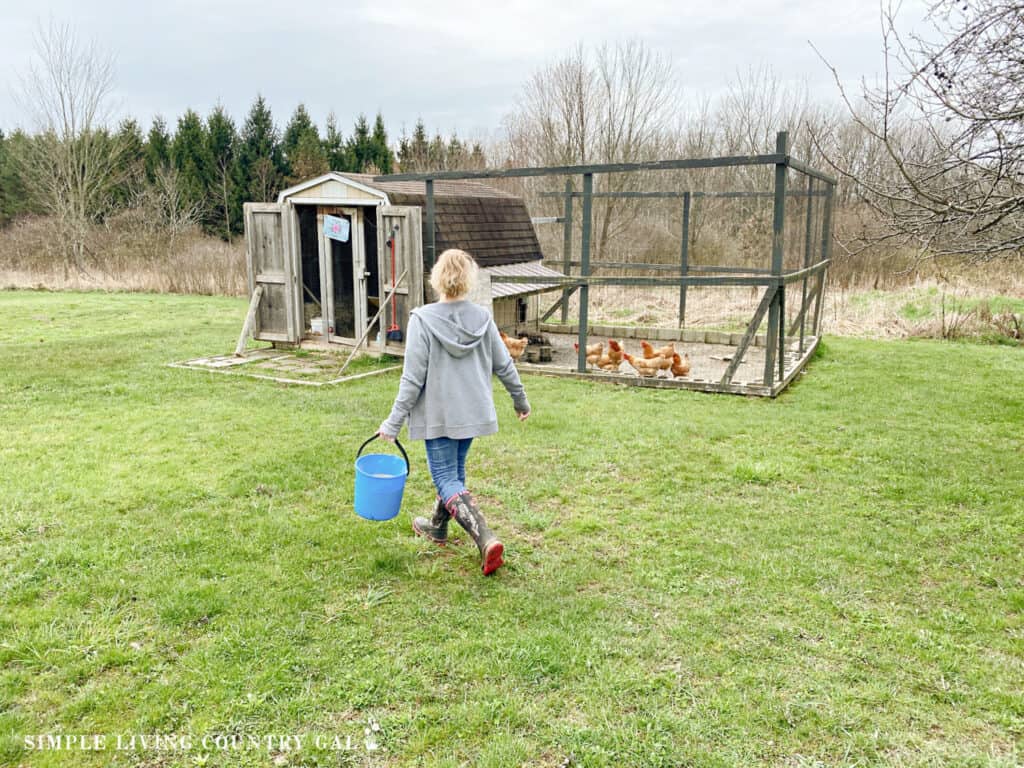
And maybe that is part of the shift we need to make. Instead of constantly asking, “How do I avoid this work?” maybe we should start asking, “How can I do this work in a calmer and more meaningful way?”
Practical Lessons We Can Learn from the Amish Work Ethic
1. Focus on One Task at a Time
If there is one thing I noticed while watching the Amish work on our barn, it was how focused they were on the task right in front of them. They were not bouncing back and forth between five different projects or stopping every few minutes to check something else. They simply worked on what needed done until it was finished.
And honestly, I think this may be one of the hardest things for many of us today.
We have become so used to multitasking that we almost view it as a skill, but most days it just leaves us feeling busy all day long without much to show for it. We start one task, get distracted by another, remember something else halfway through, and before long we have a house full of half-finished projects and no idea where our energy went.

Over the years, I have learned that the less I bounce from task to task, the calmer and more productive my day usually feels.
And no, this does not mean your life suddenly becomes perfectly organized and peaceful overnight. (oh how I wish!) Let’s face it, there will always be interruptions, especially if you have kids, animals, a busy household, or honestly…a phone sitting anywhere nearby.
But even small changes can help such as:
- Finish folding the laundry before starting dinner prep.
- Clean one section of the kitchen before moving on to another area.
- Work in the garden for thirty minutes without scrolling your phone.
- Put the groceries away before reorganizing the junk drawer you accidentally noticed while looking for scissors.
Simple changes like that can help you stay more focused, finish what you start, and create a much calmer rhythm to your day.
2. Not Every Task Has to Feel Miserable
I think somewhere along the way, many of us started viewing everyday work as something standing in the way of the life we actually want to live.
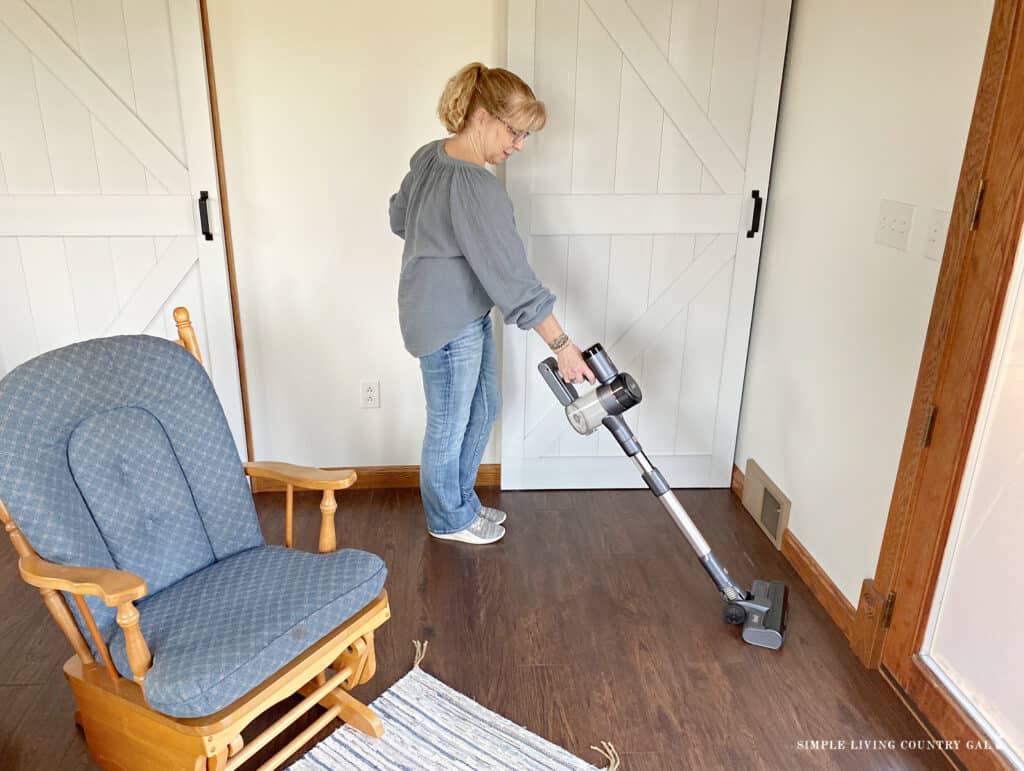
Somewhere along the way, everyday work like cooking meals, cleaning the house, or keeping up with the yard started feeling less like a normal part of life and more like a burden we are constantly trying to escape.
And trust me, I understand that feeling completely. There are plenty of chores I put off longer than I should simply because I do not feel like dealing with them. Unfortunately, ignoring them rarely makes them magically disappear. (I keep hoping this changes someday, but no luck so far.)
But watching the Amish work reminded me of something important. Not every task has to feel exciting in order to be worthwhile.
Some work is simply part of caring for a life. Cooking meals, cleaning your home, taking care of animals, and tending a garden may not always feel exciting, but those things matter.
Crock-Pot Large 8-Quart Programmable Slow Cooker with Auto Warm Setting Black Stainless SteelJOYMOOP Mop and Bucket Set, Hands-Free Flat Floor Mop with 3 Washable Microfiber Pads, Wet and Dry Use, Ideal for Home and Commercial Floor CleaningSUNCOZE Hydroponics Growing System Kit 12 Pods, Indoor herb Garden with 20W LED Grow Light, Visible Water Tank with Pump, 2.2



When you start looking at everyday work through that lens, it can change how you approach it. Maybe not perfectly every single day but enough to make things feel a little less frustrating and a little more meaningful.
I also think there is something satisfying about finishing a task instead of constantly dreading it. Even small things like wiping down the kitchen counters can create a sense of calm that lingers long after the work is done.
And maybe that is part of the lesson here. The goal is not to love every chore. The goal is to stop treating every responsibility like it is ruining your day.
3. Rest Fully When It Is Time to Rest
One thing I noticed while watching the Amish work was how different their breaks looked compared to how many of us “rest” today.
When they stopped working, they actually stopped.
They sat together drinking coffee, laughing, talking, and enjoying the break before heading back to work again. Nobody was multitasking through their downtime or trying to squeeze three more things into fifteen minutes.
And honestly, I think many of us have forgotten how to truly rest.
We grab a quick lunch while folding clothes or drink our coffee while feeding the chickens.
And maybe worst of all, even when we finally sit down at the end of the day, our brains are still running through tomorrow’s to-do list. We scroll our phones while watching television, answer texts while eating dinner, or spend our downtime worrying about everything we still need to do.
Even our rest has become busy.
I know for me, there have been plenty of days where I technically “sat down,” but never actually felt rested afterward because my mind was still spinning the entire time.
And I think that matters more than we realize.
Real rest does not always have to mean taking a vacation or spending an entire day doing nothing. Sometimes it simply means allowing yourself to fully step away from the work for a little while without dragging the mental load right along with you.
Drink your coffee slowly outside while you watch the chickens wander around the yard.
Because the truth is, people were never meant to be “on” every waking minute of the day.

4. Work With Purpose Instead of Panic
I think many of us have also started believing that rushing automatically means we are being productive. But actually, some of the most productive people I have seen were not rushing at all.
Take Amish women in the kitchen for example. So much happens in the room every day. There can be bread baking in the oven, vegetables being chopped for dinner, jars sitting on the counter ready for canning, and dessert being prepared for a large family meal ahead.
Yet somehow, their kitchen never feels frantic. (oh what a thought!)
Nobody is rushing around burning their arm on the oven door or spilling flour across the counter because they are trying to do five things at once. There is a calm rhythm to the work that still manages to get everything done.
And honestly, I think many of us could use a little more of that kind of rhythm in our own lives.
Somewhere along the way, we started believing that moving faster automatically means we are accomplishing more. So we rush through chores, hurry through errands, and push ourselves through the day at a pace that completely drains our energy.
But slowing down does not always mean you accomplish less.
In fact, I have noticed that when I slow my pace down on purpose, I usually stay more focused, make fewer mistakes, and actually finish tasks faster because I am paying attention to what I am doing instead of mentally jumping ahead to the next five things on my list.
And maybe that is part of the lesson here. Calm and productive can exist together, and you don’t have to turn yourself into a stressed-out hot mess just to have a productive day.
Calm and productive can exist together.
5. Find Satisfaction in Finished Work
I think one reason so many people feel frustrated today is because we rarely allow ourselves to enjoy the satisfaction of actually finishing something.
We rush from one task to another so quickly that there is barely time to appreciate what we just completed before moving on to the next thing waiting for our attention.
But there really is something satisfying about finished work.
A cleaned kitchen, a freshly mowed yard, or a garden row finally weeded.
Even laundry folded and put away instead of sitting in the basket for the next three days can feel so good when it’s done.
Those things may seem small, but completed work creates a sense of calm that unfinished work simply does not.
And maybe that is part of why the Amish work ethic stands out so much. The focus is not only on working hard, but on seeing the work through to the end before moving on to something else.
Not perfectly, of course. Life happens.
But there is something wonderful about looking at a finished task and knowing, “Okay…that’s done.”

How to Create a Slower, More Purposeful Rhythm to Your Day
The good news is you do not have to completely change your life to bring a little more calm and purpose into your days. In fact, some of the smallest changes often make the biggest difference.
- Start by slowing your pace down just a little.
- Finish one task before jumping to the next.
- Stop treating every single task like an emergency.
Life does not always have to feel rushed in order to be productive.
And maybe that is one of the biggest lessons we can learn from the Amish work ethic. Hard work will always be part of life, especially when you are caring for a home, a family, animals, or even a homestead. But work feels very different when it is done with focus, purpose, and a calmer rhythm instead of constant chaos.
Because sometimes the goal is not to get more done.
Sometimes the goal is simply to enjoy your life a little more while you are doing it.
