
Goat Gestation Calculator: Find Your Goat’s Due Date
Use this goat gestation calculator to estimate when your doe is due based on her breeding date. Enter the date she was bred, choose the breed type, and the calculator will give you an estimated kidding date so you can start preparing for her new arrivals.
Knowing your doe’s estimated due date can make kidding season much easier to plan for. It gives you time to get your birthing area ready, gather your supplies, and watch more closely for signs that labor is getting near.
Below, you’ll find the calculator along with helpful information on goat gestation, breeding dates, and what to expect as kidding day gets closer.
Quick Answer: How Long Are Goats Pregnant?
A goat’s gestation period is about 150 days, or roughly five months, although the exact length can vary by a few days. Using your doe’s breeding date, the goat gestation calculator above gives you an estimated kidding date so you know when to start watching more closely for signs of labor.
If you have dairy goats, then breeding and kidding are most likely part of your seasonal routine. Having a plan for when to breed so kids arrive at the best time will help ensure that both mother and baby receive proper care. We’ll discuss exactly what goat gestation means, how long it lasts, why understanding your doe’s breeding cycle is important for knowing when her kids will be born, what timeframe makes for ideal kid delivery times on the homestead, and some tips for planning a responsible breeding season.
When I first started breeding our goats, I found I was nervous through the entire process. The more I could educate myself on what to expect, the more relaxed I became. Education is a valuable resource especially when you are raising livestock on your homestead.
How Long Is a Goat’s Gestation Period?
In the goat world, gestation refers to the amount of time a baby goat remains in its mother’s womb. The average gestation period for goats is about 150 days. It does vary a bit with each breed, but overall, this is a good guideline for planning your herd’s kidding schedule.
Knowing when your doe was bred will give you the best idea of when her kids will be born. Goats typically breed in the fall and winter, so kids should arrive sometime in the spring. When you have a due date timed out, it will allow you to prepare for kidding just in case you do need to assist with delivery.
Why is It Important to Know When Your Doe Is Bred?
Knowing when your doe was bred can help you in two ways: it helps you more accurately pinpoint when her kids will be born, and it will help you ensure she gets the care she needs throughout. Finally, knowing when your doe is due will allow you time to prepare for kidding by ensuring you have enough supplies, such as clean bedding, food, water, and kid-care items.
SLCG Pro Tip: During gestation, be sure to check your does regularly so you can identify any clues that there is an issue that needs your attention. If you notice any changes in her behavior or health, you should contact a vet as soon as possible to ensure she and her babies receive the necessary care.
Planning Your Breeding Date Around Kidding Season
A gestation calculator will help you decide when to start breeding your does. This can be helpful if you have circumstances that require specific timing. For example, if you live in an area where the winters are brutally cold, you may want to plan your kiddings for when things start to warm up. You can select a target kidding month in March, giving you a breeding month in October.
Be sure to use the goat gestation calculator below to map out your own best breeding month for your herd.
When we started breeding, we chose to have the kids in the winter, but as things went on, we found that early spring was actually a better time for us. Choose a kidding date and work your way back to identify the breeding date.
What Supplies Do I Need to Have Ready When My Doe Is Due?
When your doe is due, you should make sure that you have all the necessary supplies on hand to ensure a safe and healthy delivery for both you and your goats. You will need plenty of clean bedding, kid-care items such as milk replacer and bottles, a heat source to keep the kids warm if needed, and, if possible, a separate area for your doe and her new kids.
I like to have everything together in one tote so it is ready to go at a moments notice. A goat birthing kit is essential to a less stressful kidding season.
You should also have an emergency plan in case something goes wrong during the kidding process. This could include having a trusted vet on call who can come to help in case of an emergency, as well as researching what steps you need to take if complications happen.
7 Pack Tube Feeding Kit, 8 FR Tubes & Syringes for Puppy Lamb Kitten | Whelping Newborn Care, Bulb Syringe Included, Goat Kid Foal Piglet Compatible, 10ml 30ml 60ml Syringes Ideal® Lamb and Goat Kid OB SnareLBH MARKET Lamb Feeding Tube Syringe & Lamb Puller Kit for Sheep & Goats – Complete Lambing & Newborn Care SetGoat Bottles for Feeding Baby Goats – 6 Pack 13.5 oz (400ml) PP Plastic Nipple Set for Lambs, Calves, Sheep, Goat & Other Livestock – Essential to Raise Healthy Lambs and CalvesQMARK Teat Dip Cup, Blue, 300 ml, 2 Pack | Non Reflow, Nipple Cleaning Disinfection, For Cow Sheep Goat, Non-Return Teat DipperPremier 1 Supplies Shepherd’s Lambing Essentials Kit | Includes bottle, teat, feeding bucket, syringe, thermometer, OB gloves, elastrator, hoof trimmer, drencher & more.


Overall, it’s important to be prepared and have all the necessary supplies on hand when your doe is due in order to ensure a safe and healthy delivery. By doing so, you can be sure that both mom and her kids will get off to a good start!
Kidding Process Overview
When your doe is close to her due date, you should monitor her closely for goat kidding signs that labor is close. These signs can include a growing udder, restlessness, a puffy backend, or star gazing. When these signs appear, you should be ready to take action and prepare for the kid’s arrival.
During the delivery process, it’s important to make sure that both you and your goat remain calm and stress-free. You should also be prepared to provide assistance if necessary, as some goats may need help delivering the kids.
Disclaimer: In accordance with FDA guidelines, the information and products offered on this website are not intended to diagnose, treat, cure, or prevent any disease. I am not a medical professional. Before administering any medications to your animals please contact a veterinarian first.
Things to Do When Kids Are Born:
- Clean any mucus from the kid’s face and mouth.
- If it is winter cold, you can help with some of the cleaning by wiping the kid down with a towel. It is important to leave the rest of the cleaning to the mother as this is when she will bond with her kid.
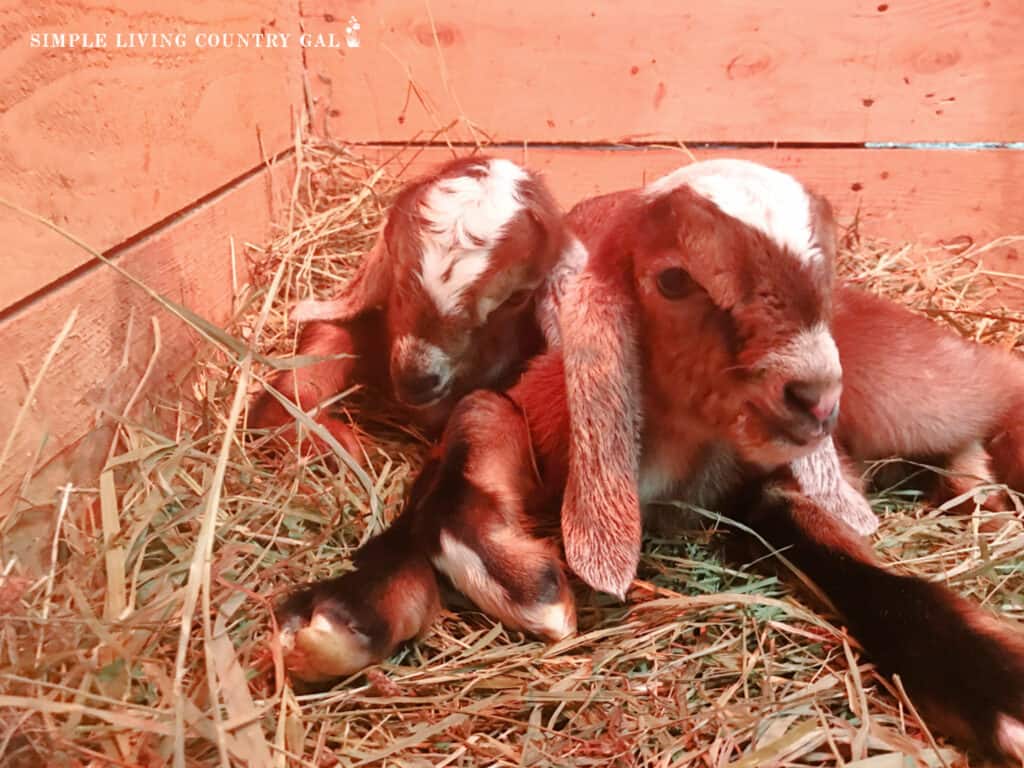
- Within 20-40 minutes of birth, the kid should have gotten to its feet and nursed at least once. This is incredibly important as the first milk is full of colostrum and antibodies crucial to the baby goats’ immune system and health.
- Tie off the umbilical cord and dip it into a solution of 7% iodine solution.
- Leave the kid(s) and mom alone to bond and rest in a separate birthing pen/area.
- Clean up the birthing area and replace it with fresh clean, and dry bedding.
- Be sure mom has plenty of water and fresh hay.
- If she is run down, you can add some molasses to her water for a bit of a boost.
- Watch everyone for signs of distress or illness in either mom or her kids to provide them with the proper care.
Goat Gestation Calculator FAQ
Yes. A goat’s due date is an estimate, and she may kid a few days before or after it. As you get closer to the estimated date, watch for changes in her udder, ligaments, behavior, and other signs that kidding is getting close.
If your doe was with a buck for several days or weeks, it can be harder to pinpoint her due date. Use the earliest and latest dates she could have been bred to give yourself a possible kidding window, then begin watching her closely as that window approaches.
Don’t wait until the estimated due date to get ready. Have your kidding supplies and birthing area prepared ahead of time so you’re ready if your doe kids earlier than expected. As her due date gets closer, check on her more often and watch for signs that labor may be near.
Be Ready for Kidding Day
Knowing when your doe is due takes a lot of the guesswork out of kidding season. Use the goat gestation calculator to estimate her due date, then mark it on your calendar so you have plenty of time to get your supplies and kidding area ready.
Remember, that date is an estimate, so start watching your doe more closely as kidding day gets near. A little preparation ahead of time can make the whole experience easier for you and your goats.